Most major RV problems don’t happen suddenly.
Your travel trailer usually gives you warning signs long before something fails — whether that’s a blowout on the highway, a bent axle, poor towing stability, or suspension damage.
The good news?
Most of these problems are completely preventable.
One of the biggest mistakes RV owners make is assuming that if the trailer “looks fine,” everything must be okay. But overloaded RVs often don’t show obvious signs until damage has already started happening.
Today we’re talking about four warning signs you should never ignore — and the hidden weight issues that often cause them.
If you’re shopping for an RV or learning how trailer weights work, we also recommend listening to our earlier episode:
What To Know Before You Buy a New or Used RV – Episode 22
1. Your Trailer Tires Are Hitting the Wheel Wells
If your tires are contacting the underside of your trailer — often called “tire rub” — that’s a serious warning sign.
You may notice:
- black marks inside the wheel well,
- damaged underbelly material,
- rubbing sounds over bumps,
- or a trailer that appears to sag lower than usual.
This typically happens because:
- the trailer is overloaded,
- the suspension is worn out,
- the leaf springs are sagging,
- or an axle has started bending.
The important thing to understand is that this problem usually develops gradually over time.
A lot of RV owners slowly add:
- generators,
- batteries,
- camping gear,
- tools,
- bike racks,
- solar upgrades,
- and extra cargo
…without realizing how quickly the weight adds up.
2. You Keep Having Trailer Tire Blowouts
One tire failure can happen for many reasons.
But repeated blowouts are usually a symptom of a bigger issue.
Common causes include:
- overloaded tires,
- old tires,
- uneven weight distribution,
- overloaded axles,
- excessive heat buildup,
- or poor-quality OEM trailer tires.
A lot of RV owners focus only on tire pressure, but weight is just as important.
Your trailer tires may technically be inflated properly while still carrying more weight than they were designed for.
And here’s the part many RVers don’t realize:
Water counts toward your trailer’s GVWR.
Your trailer’s GVWR (Gross Vehicle Weight Rating) does NOT assume your tanks are full.
That means:
- fresh water,
- waste water,
- propane,
- batteries,
- tools,
- camping gear,
- and aftermarket upgrades
…all count against your available cargo capacity.
A full fresh water tank alone can easily add 500+ pounds.
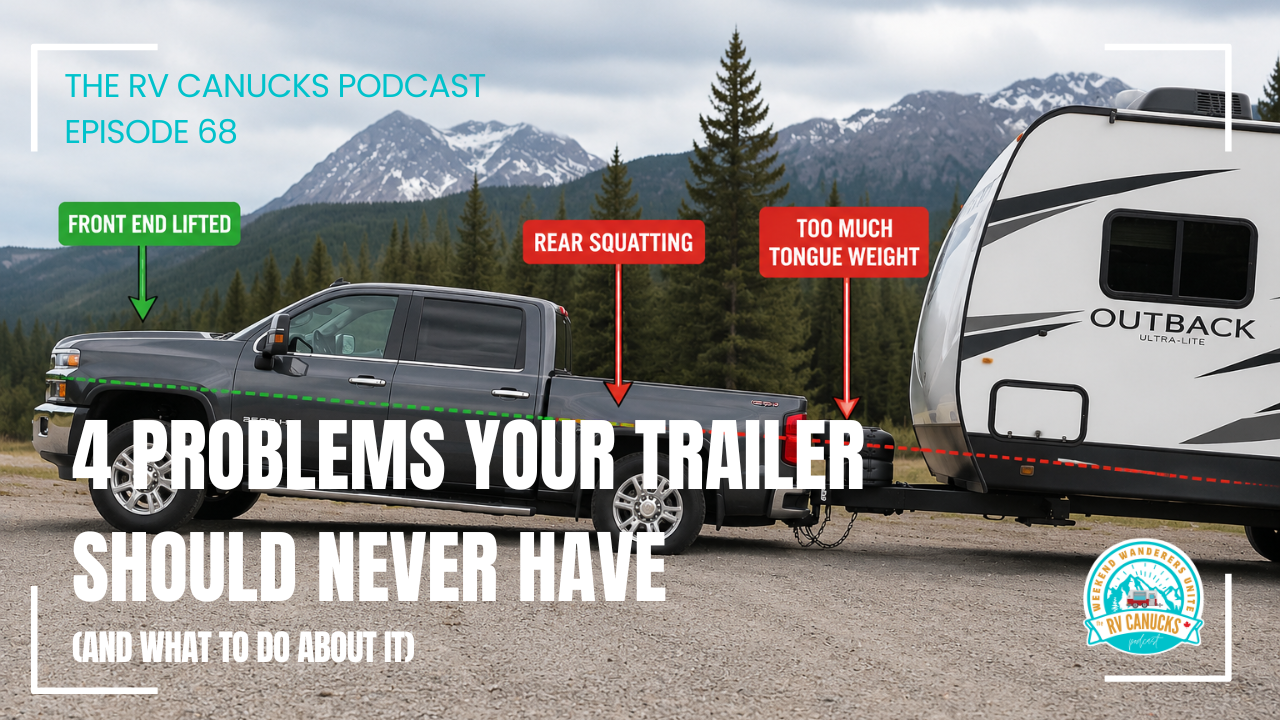
3. Your Truck Squats Excessively When You Hook Up
If the rear of your truck drops dramatically when you hitch up your trailer, your setup is trying to tell you something.
Truck squat is commonly caused by:
- excessive tongue weight,
- improper weight distribution hitch setup,
- overloaded payload,
- or cargo loaded too far forward in the trailer.
You may also notice:
- lighter steering feel,
- headlights pointing too high,
- reduced braking confidence,
- or instability while towing.
A weight distribution hitch can help improve balance and handling, but it does NOT increase your truck’s payload capacity.
One of the most common mistakes we see is RV owners relying on “dry weights” when calculating towing capacity.
Unfortunately, most trailers become significantly heavier once you add:
- propane,
- batteries,
- gear,
- food,
- water,
- and accessories.
4. Your Trailer Doesn’t Tow Straight
Your trailer should follow your tow vehicle smoothly and predictably.
If it feels unstable, leans to one side, wanders, or constantly requires steering correction, something may be wrong.
Common causes include:
- uneven cargo loading,
- bent axles,
- improper hitch height,
- suspension wear,
- or tire pressure differences.
Sometimes owners blame wind or road conditions when the real issue is improper loading or excessive weight.
This is why weighing your trailer — fully loaded for travel — is one of the best things you can do for towing safety.
The Hidden Weight Most RV Owners Forget About
Nobody overloads their RV on purpose.
It usually happens slowly over time.
Some of the most overlooked sources of weight include:
- full fresh water tanks,
- waste tanks,
- toolboxes,
- generators,
- e-bikes,
- patio gear,
- cast iron cookware,
- extra batteries,
- solar systems,
- portable grills,
- spare parts,
- and renovation upgrades.
Modern camping gear is getting more comfortable… but it’s also getting heavier.
Just because your RV has storage space doesn’t mean it was designed to safely carry unlimited weight.
The Bottom Line
Most catastrophic RV failures start as small preventable problems.
Your RV usually gives warning signs first:
- sagging suspension,
- repeated blowouts,
- excessive truck squat,
- poor towing behavior,
- or unusual tire wear.
The key is catching those signs early before they turn into expensive repairs — or dangerous situations on the highway.
And if you haven’t weighed your trailer fully loaded yet, this might be your sign to do it.
Related Episode
If you’re buying an RV or trying to better understand towing weights, capacities, and common RV mistakes, check out:
What To Know Before You Buy a New or Used RV – Episode 22
Questions for Our RV Canucks Community
- Have you ever weighed your RV fully loaded?
- What item surprised you most when you learned how much it weighed?
- Have you experienced truck squat, tire blowouts, or suspension issues while towing?
Let us know in the comments or connect with us on social media.
About The Author
